
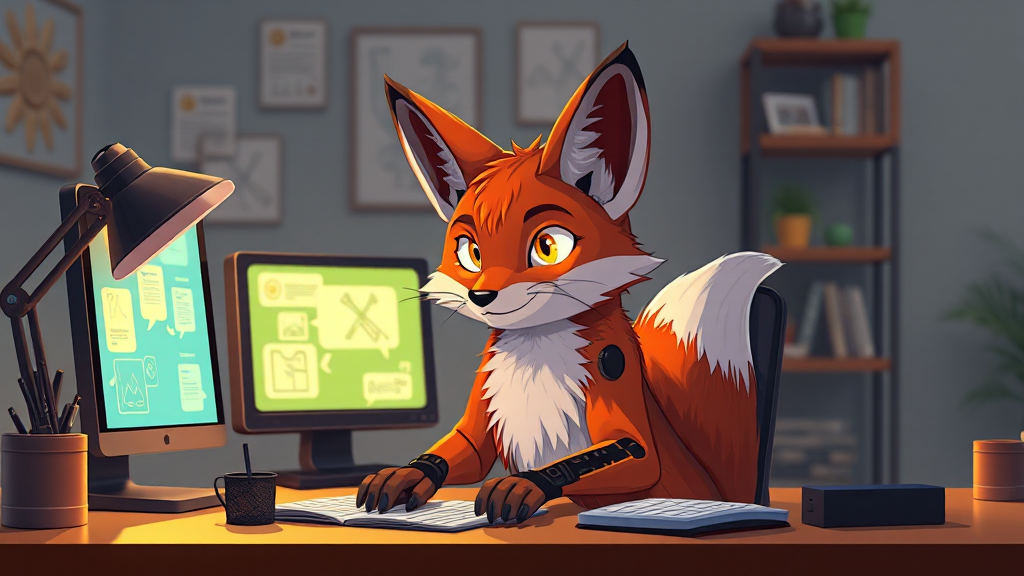
How Furry AI Characters Are Reshaping Digital Storytelling and Creative Play
The rise of AI companions has opened a new frontier for fans of anthropomorphic art and fiction. Instead of scrolling through static galleries or waiting for a commission slot to open, enthusiasts can now interact with furry AI characters that respond, remember details, and evolve through conversation. This shift is not just a novelty for tech hobbyists; it is changing how people explore identity, build narratives, and connect with creative communities that have long thrived on imagination and personal expression.
For anyone who has spent time in fandom spaces, the appeal is immediate. A well-designed AI character can carry a consistent personality, hold a conversation about lore, and adapt to the tone a user brings. That combination of flexibility and responsiveness makes these characters feel less like tools and more like collaborators in an ongoing story.
What Exactly Are Furry AI Characters?
At their core, furry AI characters are conversational agents built around anthropomorphic personas. They might be foxes, wolves, dragons, rabbits, or completely original species. What separates them from generic chatbots is the emphasis on character depth: backstory, speech patterns, emotional tendencies, and visual identity all work together to create a coherent presence.
These characters are typically powered by large language models that have been guided through carefully written prompts, personality profiles, and sometimes fine-tuning. The goal is not simply to answer questions but to sustain a role. A user might discuss a fictional world, ask for advice in character, or co-write a scene. The AI stays within the boundaries of the persona while still feeling spontaneous.
Visual design matters too. Many platforms pair text interaction with generated portraits or reference sheets, giving users a face to go with the voice. This dual focus on language and appearance is what makes the experience feel complete rather than purely functional.
Why Anthropomorphic Personas Work So Well With AI
Anthropomorphic characters have a unique advantage in AI form. Because they blend human and animal traits, they can express emotions in ways that feel both familiar and slightly alien. That tension creates room for creative exploration. A user can project warmth, mischief, wisdom, or vulnerability onto a character without the constraints of human social expectations.
There is also a practical benefit. Furry personas come with established visual language and cultural touchstones. Fans already understand what a confident wolf or a curious otter might represent. AI can lean into those archetypes while adding nuance through conversation. The result is a character that feels instantly recognizable yet personally tailored.
This combination lowers the barrier to entry for storytelling. You do not need to be a professional writer or artist to engage. You simply need curiosity and a willingness to play.
The Technology Behind the Conversation
Modern furry AI characters rely on several layers of technology. The first is a language model capable of generating coherent, context-aware text. The second is a memory system that tracks prior interactions so the character can reference past events. The third is a personality framework, often implemented through system prompts or character cards, that defines how the AI should behave.
Some platforms also incorporate image generation, allowing the character to produce visual responses or self-portraits. Others add voice synthesis, which can make interactions feel more immersive. The best implementations balance these features without overwhelming the user.
Latency and consistency remain challenges. A character that forgets key details or shifts tone abruptly breaks immersion. Developers address this through better memory architectures, retrieval-augmented generation, and stricter persona guidelines. As these systems improve, the gap between chatting with an AI and talking to a fully realized character continues to shrink.
Creative Writing and Roleplay Get a New Engine
Writers and roleplayers have been among the earliest adopters. For them, furry AI characters act as brainstorming partners, scene partners, and sometimes editors. A novelist might use an AI character to test dialogue for a secondary protagonist. A roleplayer might use one to explore a scenario that would be difficult to coordinate with a human group.
The key advantage is availability. Human collaborators have schedules, energy limits, and their own creative agendas. An AI character is always ready, always in character, and never judges a rough draft. That makes it easier to experiment, take risks, and push a story into unexpected places.
Many users report that the AI helps them overcome creative block. By responding to prompts in ways they did not anticipate, the character introduces new directions. Over time, these interactions can generate material that feels genuinely collaborative rather than one-sided.
Community, Identity, and Safe Exploration
Fandom has always been a space where people explore parts of themselves that might be difficult to express elsewhere. Furry AI characters extend that tradition into interactive territory. A user can try on different personalities, relationship dynamics, or emotional responses without real-world consequences.
This can be especially valuable for people who are shy, isolated, or still figuring out their own identity. The AI does not replace human connection, but it can serve as a low-pressure space to practice social interaction and self-expression. Many platforms emphasize consent, boundaries, and user control, which helps keep these experiences healthy.
At the same time, communities are developing norms around AI use. Artists discuss how to credit or protect their styles. Writers debate what counts as collaboration. These conversations are ongoing, but they reflect a maturing ecosystem rather than a passing trend.
Designing a Character That Feels Alive
Creating a compelling furry AI character is part art, part engineering. The most successful examples share a few traits. They have a clear voice, meaning their vocabulary and rhythm are distinctive. They have consistent motivations, so their responses align with their goals. And they have limits, because a character who agrees with everything quickly becomes boring.
Good design also leaves room for growth. A character who can learn from interactions, adjust their mood, or reveal new backstory over time feels more dynamic. This is where memory and adaptive prompting become essential. Without them, the character remains static.
Visual consistency matters as well. If the character appears in generated images, those images should match the established design. Platforms that allow users to upload reference sheets or define appearance details tend to produce more satisfying results.
Ethical Questions and Responsible Use
As with any emerging technology, there are ethical considerations. One concern is the potential for AI characters to be used in ways that disrespect artists or bypass consent. Another is the risk of users forming unhealthy attachments that replace real relationships.
Responsible platforms address these issues through clear guidelines, reporting tools, and transparency about how the AI works. Users can also take steps to keep interactions balanced. Treating the AI as a creative tool rather than a substitute for human connection is a healthy starting point.
It is also worth noting that furry AI characters are not sentient. They generate responses based on patterns in data. Recognizing that does not diminish the fun, but it does help set realistic expectations.
What the Future Holds
The next few years will likely bring more sophisticated memory, better emotional modeling, and tighter integration with visual and audio tools. We may see characters that can appear in virtual worlds, react to voice tone, or collaborate across multiple sessions in more natural ways.
There is also potential for educational and therapeutic applications. A carefully designed anthropomorphic AI could help users practice language skills, work through social scenarios, or explore creative writing in a supportive environment.
For now, the appeal remains simple. Furry AI characters offer a new way to play, create, and connect. They combine the warmth of fandom with the possibilities of machine intelligence, and they invite users to imagine what a conversation with a truly original character might feel like.
FAQ
Are furry AI characters only for roleplay?
No. While roleplay is a popular use, people also use them for brainstorming, language practice, emotional reflection, and casual conversation. The flexibility of the format means the experience can be tailored to many goals.
Do I need artistic skills to enjoy them?
Not at all. Many platforms provide visual generation tools or pre-made designs. You can engage purely through text if you prefer, or use images as an optional enhancement.
Can these characters remember past conversations?
Many modern implementations include memory features that allow the character to recall details from earlier interactions. The quality and duration of memory vary by platform, so it is worth checking how each one handles context.
Are furry AI characters safe to use?
Safety depends on the platform and how you use it. Reputable services offer moderation, privacy controls, and clear terms. As with any online tool, setting personal boundaries and taking breaks is a good practice.
Will they replace human writers or artists?
They are better understood as tools that augment human creativity rather than replacements. Many artists and writers use them to explore ideas, but the human perspective remains central to meaningful creative work.
Readers who are interested in this topic will benefit from exploring multiple perspectives and understanding the nuanced approaches that industry leaders recommend. Taking time to research thoroughly ensures better outcomes and more informed decision-making.
Those looking to gain deeper knowledge in this area should consider following expert analysis, staying updated with the latest developments, and engaging with professional communities where these topics are discussed in detail.
A comprehensive understanding of this subject requires looking at both theoretical foundations and practical applications. By combining study with hands-on experience, learners can develop a well-rounded perspective that serves them well in real-world scenarios.
As the landscape continues to shift and evolve, staying informed about emerging trends and best practices becomes increasingly valuable. This ensures you remain competitive and capable of adapting to new challenges as they arise.