
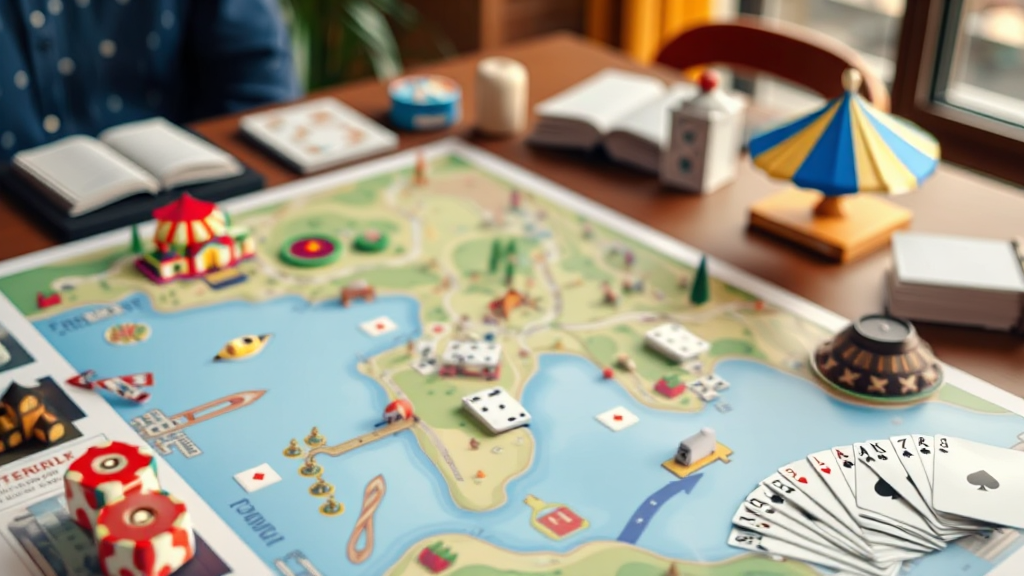
Diwa Ace New: A Fresh Way to Explore Rummy Game Parks Online
Card game enthusiasts in India are always looking for clearer, more organised ways to discover rummy content. That search often leads to new names, new directories and new ways of mapping out the games people love. One such name gaining attention in casual gaming circles is Diwa Ace New, a term that has started to appear alongside discussions about rummy game parks, card tables and online gaming directories. This article takes a closer look at what this concept represents, how it fits into the wider rummy ecosystem, and why an informational map-style approach can genuinely improve the way adults explore card games online.
Rather than treating rummy as a single, isolated activity, the idea of a “game park” reframes it as a collection of experiences. Think of it as a directory where different card tables, playing styles and side attractions are laid out for visitors to browse at their own pace. It is an approach that suits the modern player who wants orientation before participation, and it is exactly this framing that makes names like Diwa Ace New worth understanding.
What Diwa Ace New Represents in the Rummy World
When people search for Diwa Ace New, they are usually trying to understand a label that sits at the intersection of card game culture and online discovery. In the context of rummy-focused platforms, the term functions as a signpost. It points toward an organised way of navigating the many variations of rummy — from straightforward point-based formats to more layered strategic tables — without forcing the player to wander through cluttered interfaces.
The value of such a signpost is easy to underestimate. Rummy is a game with dozens of regional flavours across India, and each flavour carries its own rhythm, scoring conventions and table etiquette. A directory that groups these variations into a coherent map helps both newcomers and experienced players find the version that matches their mood and skill level. Diwa Ace New, understood in this light, is less about a single game and more about a guided pathway through many games.
It also reflects a broader shift in how adults consume gaming content. Instead of jumping straight into a table, many players now prefer to read, compare and orient themselves first. Informational hubs have grown in importance because they answer the quiet questions: Which format suits a beginner? How do scoring systems differ? What should a player expect from a casual versus a competitive table? These are the questions a well-structured game park map is designed to address.
Why a Game Park Map Approach Helps Players
The phrase “game park map” might sound playful, but the underlying logic is practical. A map reduces confusion. When rummy content is organised into zones — beginner tables, strategy corners, variation guides, etiquette notes — a player can move with intention rather than guesswork. This is the core promise of the directory model that platforms like AA Game Park have popularised.
There are several concrete benefits to this layout:
- Clear orientation: New players can see the full landscape before committing time to any single format.
- Skill matching: Experienced players can skip straight to advanced tables and strategy resources.
- Variation discovery: Regional rummy styles become visible instead of hidden behind generic labels.
- Reduced overwhelm: A structured map prevents the fatigue that comes from endless scrolling.
- Better expectations: Descriptions and guides set realistic expectations about pace and complexity.
For adults who treat rummy as a hobby rather than a race, this kind of structure is genuinely useful. It respects the player’s time and turns browsing into a pleasant part of the experience rather than a chore.
How Rummy Variations Fit Into the Park Concept
One of the strengths of a rummy game park is that it accommodates variety without losing coherence. Indian rummy alone includes formats such as 13-card rummy, 21-card rummy, points rummy, pool rummy and deals rummy. Each has a distinct personality. Points rummy rewards careful calculation. Pool rummy stretches a session across multiple deals. Deals rummy compresses the action into fixed rounds. When these formats are presented as attractions within a single park, the player gains a mental model that makes switching between them far less intimidating.
Beyond formats, there are also thematic side attractions. Strategy guides, hand-ranking references, common-mistake lists and glossary entries all function like small pavilions within the park. They are not the main event, but they enrich the visit. A player who spends ten minutes reading about discard strategy before sitting at a table will usually enjoy the session more than one who dives in blind.
This is where the directory philosophy proves its worth. Instead of scattering information across unrelated pages, a game park map gathers it into a single navigable space. The result is a learning environment that feels welcoming rather than academic.
Getting Started: A Practical Path for New Players
If you are new to rummy and curious about how a game park directory can help, a simple step-by-step approach works well. First, spend a few minutes understanding the basic objective: forming valid sets and sequences from the cards you are dealt. Second, read a short guide on hand rankings so that terms like “pure sequence” and “impure sequence” are not mysterious. Third, choose one format to focus on for your first few sessions — points rummy is often recommended because its scoring is straightforward.
Once you are comfortable, use the directory to explore adjacent formats. This gradual expansion mirrors how a visitor might explore a real park: start with the main attraction, then wander into the side areas. The advantage of doing this digitally is that you can move at your own pace, revisit guides whenever needed, and never feel pressured by a crowd.
It also helps to keep expectations realistic. Rummy is a game of skill with an element of chance, and no directory can change that. What a good directory can do is remove friction, clarify rules and connect you with the right table for your current level. That is a meaningful improvement over unstructured browsing.
The Role of Informational Directories in Online Gaming
Informational directories occupy a specific and valuable niche in the online gaming world. They are not game operators; they are organisers. Their job is to make sense of a sprawling landscape and present it in a way that respects the visitor’s intelligence. For an adult audience in India, this matters because the rummy ecosystem is large, varied and occasionally confusing.
A directory that focuses on clarity tends to do a few things well. It labels content accurately. It separates beginner material from advanced material. It avoids hype and instead offers description. It keeps navigation simple so that the visitor always knows where they are and how to go back. These are unglamorous qualities, but they are the foundation of a trustworthy resource.
When a name like Diwa Ace New surfaces in this context, it is usually attached to the idea of discovery — a fresh entry point into that organised landscape. The freshness is part of the appeal. New labels signal that the ecosystem is still growing and that there is room for improved ways of presenting familiar games.
Common Misunderstandings to Avoid
Because rummy terminology can be loose, a few misunderstandings tend to circulate. One is the assumption that a “game park” refers to a physical amusement venue. In the context of online rummy directories, it is a metaphor for a structured collection of card tables and resources. Another is the assumption that any single label describes a specific game variant. More often, such labels describe a way of organising or presenting content.
A third misunderstanding concerns audience. Rummy content aimed at adults is intended for adults 18 and over, and responsible platforms make this clear. The focus is on skill, strategy and enjoyment, not on unrealistic promises. Keeping these distinctions in mind helps visitors evaluate directories more critically and use them more effectively.
Finally, it is worth remembering that no directory replaces the experience of playing. Reading about rummy is useful preparation, but the game itself is where learning happens. The best directories acknowledge this and position themselves as companions to play rather than substitutes for it.
Frequently Asked Questions
What exactly is Diwa Ace New?
In the context of online rummy directories, Diwa Ace New refers to a discovery label associated with navigating rummy game park content. It is best understood as a signpost toward organised card game resources rather than a single game format.
Is a rummy game park the same as a physical amusement park?
No. The term is a metaphor used by informational gaming websites to describe a structured map of card tables, variations and learning resources. It has nothing to do with rides or physical venues.
Who is the intended audience for these rummy directories?
They are aimed at adults aged 18 and over who are interested in rummy as a skill-based card game. The content focuses on rules, strategy and orientation within the game ecosystem.
Do I need prior rummy experience to use a game park map?
Not at all. A well-designed directory includes beginner-friendly sections alongside advanced material, so newcomers can start with basic guides and gradually explore more complex formats.
How do I choose which rummy variation to start with?
Points rummy is often recommended for beginners because its scoring is simple and the rules are easy to grasp. Once comfortable, players can explore pool rummy, deals rummy and other variations using the directory as a guide.
Final Thoughts on Navigating Rummy Content Smarter
The online rummy landscape rewards players who take a moment to orient themselves. Labels like Diwa Ace New, and frameworks like the game park map, exist to make that orientation easier. They turn a scattered collection of tables and guides into something closer to a curated experience — one where you can see the whole picture before choosing your seat.
For adults in India who enjoy card games and want a clearer path through the many rummy variations available, informational directories offer real value. They do not promise shortcuts or guaranteed outcomes. They simply organise knowledge well, which is often the most useful thing a gaming resource can do. Approach them with curiosity, use them to plan your next session, and let the game itself provide the rest of the enjoyment.